

Dialysis
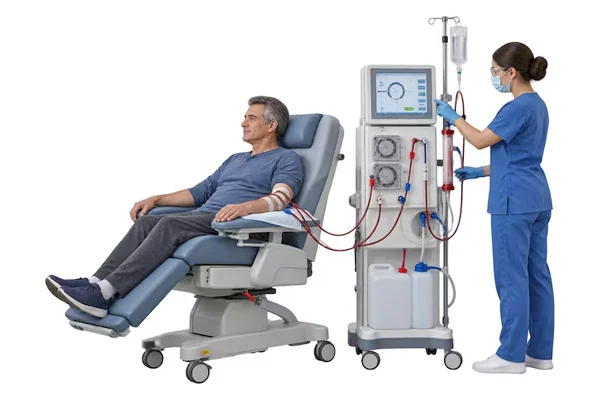
Dialysis in Rajinder Nagar
Dialysis is a medical treatment that helps remove waste products, excess fluid and certain electrolytes from the blood when the kidneys cannot perform these functions adequately. It is commonly used in patients with advanced kidney failure and may also be required temporarily in selected cases of acute kidney injury. The type and timing of dialysis depend on kidney function, symptoms, laboratory results and the patient's overall medical condition.
If you are looking for Dialysis in Rajinder Nagar, Dr. Vishwas Gulati provides specialist consultation in nephrology and renal transplantation. A nephrology assessment can help determine whether dialysis is necessary, which treatment method may be appropriate and how kidney-related complications can be managed.
Dialysis does not cure kidney disease, but it can replace some important kidney functions and support patients whose kidneys are unable to maintain a safe internal balance.
What Is Dialysis?
Healthy kidneys filter the blood, remove metabolic waste, regulate fluid levels and maintain electrolyte and acid-base balance. When kidney function declines significantly, these substances can accumulate in the body and cause serious complications.
Dialysis uses a specialised process to remove waste products and excess fluid. It can also help control certain electrolyte imbalances and metabolic disturbances.
Dialysis may be required for patients with end-stage kidney disease or when acute kidney injury causes complications that cannot be adequately managed through medication and other supportive treatments.
The decision to start dialysis is not based on a single creatinine or eGFR value alone. Doctors consider the patient's symptoms, fluid status, laboratory findings and overall clinical condition.
When Is Dialysis Required?
Dialysis may be recommended when the kidneys cannot adequately maintain the body's internal balance.
Common indications include:
- Advanced kidney failure with significant symptoms
- Severe fluid overload that does not respond adequately to medication
- Dangerous potassium elevation
- Severe metabolic acidosis
- Certain complications caused by accumulated waste products
- Selected cases of acute kidney injury
- Specific poisonings or toxic exposures that can be treated with dialysis
Some patients require dialysis for a short period while recovering from acute kidney injury. Others with irreversible kidney failure may need ongoing treatment unless they undergo a suitable kidney transplant.
Types of Dialysis
The two main forms of dialysis are haemodialysis and peritoneal dialysis. Each has different requirements, benefits and limitations.
1. Haemodialysis
Haemodialysis uses a dialysis machine and a specialised filter, known as a dialyser, to remove waste products and excess fluid from the blood.
Blood travels from the patient's circulation through the dialyser and returns to the body after filtration. Treatment is generally performed in a dialysis centre or hospital, although home haemodialysis may be available in selected settings with appropriate training and support.
The frequency and duration of treatment depend on the patient's medical needs and the prescribed dialysis schedule.
2. Peritoneal Dialysis
Peritoneal dialysis uses the lining of the abdomen, called the peritoneum, as a natural filtering membrane. A special dialysis solution is introduced into the abdominal cavity through a catheter. Waste products and excess fluid move into the solution, which is subsequently drained.
This treatment can be performed at home after appropriate training. Some patients use manual exchanges during the day, while others use an automated machine overnight.
Suitability depends on medical factors, home circumstances, patient preference and the availability of training and clinical support.
Haemodialysis Access Options
For haemodialysis, a reliable route for blood to travel to and from the dialysis machine is essential. The choice of access depends on the urgency of treatment, expected duration of dialysis and the patient's blood vessels.
Arteriovenous Fistula
An arteriovenous fistula is created surgically by connecting an artery to a vein, usually in the arm. It is often preferred for long-term haemodialysis because it can provide durable access and generally has a lower infection risk than a central venous catheter.
A fistula needs time to mature before it can be used, and its suitability must be assessed individually.
Arteriovenous Graft
An arteriovenous graft uses a synthetic tube to connect an artery and a vein. It may be considered when the patient's blood vessels are unsuitable for a fistula.
The timing of use depends on the type of graft and the treating team's assessment.
Dialysis Catheter
A central venous catheter provides access through a large vein. It may be used when dialysis must begin urgently or while a more durable access is being established.
Catheters carry risks, including bloodstream infection, clotting and reduced blood flow. Careful insertion, maintenance and monitoring are important.
Dialysis in Rajinder Nagar: Evaluation and Treatment Planning
Dialysis treatment requires an individualised assessment to determine when treatment should begin and which method is most suitable.
1. Kidney Function Assessment
Blood tests, urine investigations and previous reports help establish the extent of kidney dysfunction. Doctors also assess whether kidney function is declining rapidly or has reached an advanced stage.
2. Evaluation of Symptoms and Complications
Symptoms such as breathlessness, persistent nausea, confusion, swelling and reduced urine output may indicate complications. Laboratory results are reviewed to identify electrolyte disturbances, acidosis and other abnormalities.
3. Selection of Dialysis Method
The choice between haemodialysis and peritoneal dialysis depends on medical suitability, urgency, lifestyle considerations, vascular access, abdominal conditions and available treatment facilities.
4. Preparation for Dialysis Access
For planned haemodialysis, early assessment of blood vessels can help with access planning. An arteriovenous fistula may be created before dialysis becomes necessary when clinically appropriate.
If urgent dialysis is required, a temporary or tunneled catheter may be considered according to the clinical situation.
5. Monitoring During Treatment
Dialysis sessions require monitoring of blood pressure, fluid removal, symptoms and treatment tolerance. The dialysis prescription may be adjusted according to laboratory findings and the patient's response.
6. Ongoing Nephrology Follow-Up
Regular reviews help assess dialysis adequacy, nutritional status, anaemia, mineral and bone health, blood pressure and vascular access function.
For patients with irreversible kidney failure, kidney transplantation may also be discussed if medically appropriate.
Benefits and Limitations of Dialysis
Dialysis can remove waste products and excess fluid, help control certain electrolyte disturbances and reduce symptoms associated with kidney failure. It can support survival and improve well-being when kidney function is insufficient to maintain normal body processes.
However, dialysis does not fully replace every function of healthy kidneys. Patients may still require medicines, dietary guidance, fluid management and monitoring for anaemia, cardiovascular disease and mineral imbalances.
Treatment may also involve time commitments, access-related complications, fatigue or changes in blood pressure. Discussing these considerations with a nephrologist can help patients understand their options and plan care appropriately.
Diet and Lifestyle During Dialysis
Nutritional needs vary depending on the type of dialysis, residual kidney function, laboratory results and other medical conditions.
General considerations may include:
- Following the recommended sodium intake to help control thirst and blood pressure.
- Managing fluid intake according to urine output and the treating team's advice.
- Adjusting potassium intake when blood potassium levels require it.
- Following individual protein recommendations to maintain nutritional health.
- Taking prescribed medicines and supplements as directed.
- Monitoring weight and reporting unexpected fluid-related changes.
- Keeping dialysis access clean and reporting redness, pain, discharge or fever promptly.
Patients should not follow a restrictive kidney diet without professional guidance because nutritional requirements differ considerably between individuals.
Why Consult Dr. Vishwas Gulati in Rajinder Nagar?
Dr. Vishwas Gulati is a Consultant in Nephrology and Renal Transplantation at BLK-Max Super Speciality Hospital, Delhi, with over 17 years of experience.
A nephrology consultation can help patients understand their kidney function reports, assess the need for dialysis and discuss available treatment options. Specialist care also supports dialysis planning, complication management, medication review and evaluation for kidney transplantation when appropriate.
Early discussion about dialysis can help suitable patients prepare for treatment rather than waiting until an emergency develops.
Frequently Asked Questions
1. When does a patient need dialysis?
Dialysis may be required when kidney failure causes severe fluid overload, dangerous electrolyte abnormalities, metabolic acidosis or symptoms associated with accumulated waste products. The decision depends on the overall clinical condition rather than one test result.
2. Is dialysis a permanent treatment?
Not always. Some patients with acute kidney injury need temporary dialysis until their kidney function recovers. Patients with irreversible advanced kidney failure may require long-term dialysis or may be eligible for transplantation.
3. What is the difference between haemodialysis and peritoneal dialysis?
Haemodialysis uses a machine and filter to clean the blood, while peritoneal dialysis uses the abdominal lining as a filtering membrane. Both treatments can be effective, but their suitability depends on individual medical circumstances.
4. Can dialysis patients pass urine?
Yes. Some patients continue to produce urine during dialysis, particularly in the earlier stages of treatment. Urine output may decline over time, but this varies between individuals.
5. Can dialysis patients travel or work?
Many people receiving dialysis continue to work, travel and participate in daily activities with appropriate planning. Travel arrangements, treatment schedules, dietary requirements and access to dialysis facilities should be discussed with the care team.
6. When should I consult a nephrologist in Rajinder Nagar?
Consider a nephrology consultation if you have advanced kidney disease, worsening kidney function, persistent fluid retention or abnormal electrolyte results. Severe breathlessness, confusion or significant reduction in urine output requires urgent medical evaluation.
Conclusion
Dialysis is an important treatment for patients whose kidneys cannot adequately remove waste products and maintain fluid and electrolyte balance. Understanding the available methods, preparing appropriate access and attending regular follow-up can help support safe and effective care. For Dialysis in Rajinder Nagar, consult Dr. Vishwas Gulati for specialist assessment and guidance on kidney replacement therapy.


